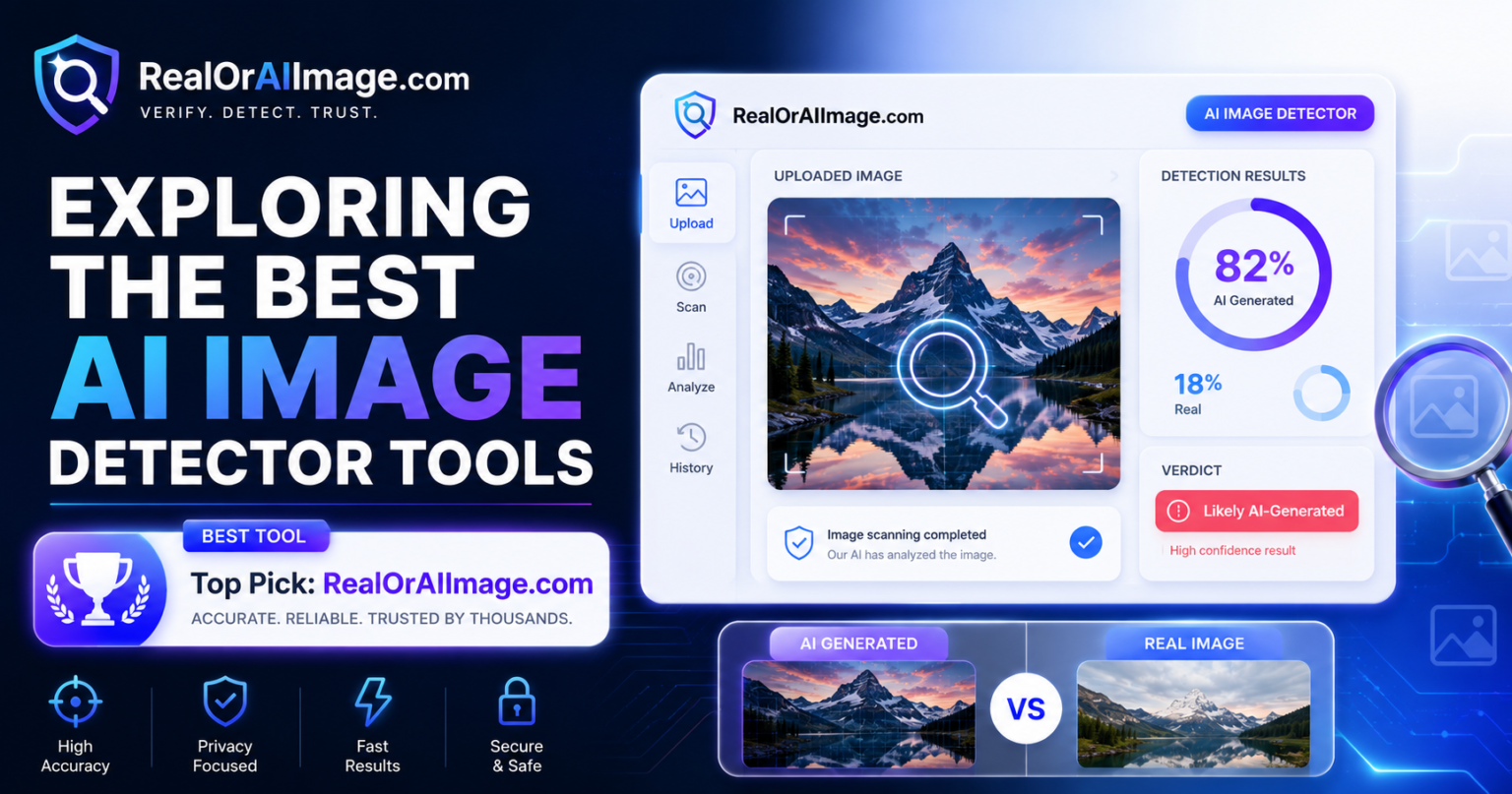
Introduction to AI Image Detection
Artificial Intelligence (AI) image detection refers to the capability of software to identify, classify, and analyze visual content through sophisticated algorithms. By leveraging the power of machine learning, these systems can interpret various aspects of images, such as objects, faces, and even emotions. The significance of AI image detection spans across numerous industries, including healthcare, automotive, security, and entertainment, where the ability to accurately process visual data is crucial.
The process of AI image detection begins with training machine learning models using vast datasets that include labeled images. Through this training phase, the models learn to recognize patterns and features within the data. For instance, in healthcare, AI tools can assist radiologists by identifying anomalies in medical images, leading to quicker diagnoses and improved patient outcomes. In the autonomous vehicle sector, AI image detectors are integral for real-time obstacle recognition, ensuring the safety and efficiency of navigation systems.
As the technology advances, the application of AI in image detection continues to evolve. Modern tools not only enhance the accuracy of detecting objects but also improve their ability to differentiate between similar items or understand the context in which an image is taken. This contextual understanding can significantly refine the results of search engines, social media platforms, and security systems, enhancing user experience and operational efficiency. Furthermore, these advancements underscore the need for effective image detection tools that can keep pace with the growing demand for automation and AI integration across various sectors.
Criteria for Choosing AI Image Detector Tools
When selecting an AI image detector tool, several essential features and criteria should guide the decision-making process. One of the foremost considerations is accuracy; the tool must provide high precision in detecting and classifying images to be effective in real-world applications. Users should seek tools that showcase robust performance metrics, including true positive rates and low false positives, to ensure reliability in results.
Speed is another critical factor. In many scenarios, the ability to process and analyze images quickly is of paramount importance, especially in areas such as security and real-time monitoring. Users should evaluate tools not only for their processing time but also for their ability to function efficiently under various workload conditions.
Usability should not be overlooked when selecting an AI image detector. A user-friendly interface that simplifies navigation and operation significantly enhances overall user experience. Comprehensive documentation and support resources further augment the tool’s usability, allowing users of varying skill levels to harness the technology effectively.
The ability to integrate with other systems is a vital consideration as well. An AI image detector tool should be compatible with existing software and workflows, allowing for seamless management of image data. Effective integration capabilities promote a streamlined approach to image processing and analysis, facilitating a cohesive experience across platforms.
Lastly, consider the tool’s ability to handle diverse types of imagery, including different formats and resolutions, which is critical for applications across various sectors, from medical imaging to social media content analysis. A flexible tool that adapts to various use cases can provide extensive value in diverse environments.
Top AI Image Detector Tools in 2023
In the rapidly evolving field of artificial intelligence, several image detection tools have emerged as frontrunners in 2023. These AI image detector tools offer a range of features designed to enhance image processing and analysis, making them invaluable assets across various industries.
One of the leading tools is Google Cloud Vision AI, which excels in object and scene detection. Its robust features include text extraction from images and the ability to categorize visual content. This versatility is supported by Google’s extensive machine learning capabilities, making it particularly effective for businesses seeking to implement image recognition for various applications.
Another noteworthy contender is Amazon Rekognition. This tool stands out with its facial recognition capabilities, allowing users to analyze and compare faces within large datasets. Additionally, it offers real-time analysis, making it a popular choice for security and surveillance applications. Its integration with other AWS services enhances usability, driving efficiency for cloud-based projects.
Microsoft Azure Computer Vision is also on the list, providing comprehensive visual analysis functions. It can extract information from images, generate descriptions, and identify prominent objects. Azure’s competitive pricing model and scalability appeal to developers looking to leverage advanced image processing features in their applications.
Furthermore, Clarifai deserves mention for its user-friendly interface and custom model training options. This platform allows users to create tailored image recognition solutions, which is especially beneficial for specialized fields like healthcare and manufacturing.
Lastly, OpenCV is an open-source tool that caters to a diverse audience. With extensive libraries for computer vision, it provides a strong foundation for developers experimenting with image detection algorithms. Its flexibility and community support make it highly appealing for educational and commercial projects.
Comparative Analysis of AI Image Detector Tools
As the demand for AI image detector tools increases, a comparative analysis of the leading options becomes essential for making informed choices. Several factors set these tools apart, including performance, price range, and user reviews.
Performance is a critical metric when evaluating AI image detector tools. Many of these tools leverage advanced machine learning algorithms to enhance image recognition capabilities. For instance, some platforms boast an accuracy rate exceeding 95%, allowing for the quick and reliable identification of images across various domains, including security and content moderation. Performance can be noticeably affected by factors such as image quality and complexity, hence testing each tool under similar conditions is advisable for proper evaluation.
Price range is another pivotal consideration. AI image detector tools can vary significantly in cost, with some offering subscription-based models while others provide pay-per-use options. Budget-conscious users might prefer tools with flexible pricing structures that allow for scale as needed. Additionally, free trials offered by numerous platforms enable prospective users to assess the tool’s utility before making a financial commitment. This can be particularly helpful in understanding usage implications without immediate investment.
User reviews also play a significant role in selecting the right AI image detector tool. By analyzing feedback on usability, customer support, and overall satisfaction, prospective users can gauge how well a tool fits their specific needs. Reading about others’ experiences can lead to discovering potential challenges or highlights that may not be apparent at first glance. As a result, aggregating diverse reviews can provide insight into the average user experience and overall reliability of the AI image detectors.
In essence, by examining performance, pricing, and user satisfaction collectively, individuals can make an informed decision tailored to their requirements and context when choosing an AI image detector tool.
Use Cases of AI Image Detection
The application of AI image detection is rapidly growing across various industries, reshaping operations and enhancing efficiency. In the healthcare sector, AI image detection tools play a vital role in diagnostics and disease management. For instance, these tools analyze medical images, such as X-rays and MRIs, to assist radiologists in identifying tumors or fractures more accurately. The use of such technologies not only speeds up diagnosis but also minimizes the risk of human error, leading to better patient outcomes.
In the realm of security, AI image detection systems enhance surveillance and threat detection. These tools can process and analyze vast amounts of video footage in real time, identifying suspicious behavior or recognizing faces of persons of interest. By automating surveillance, organizations can improve response times and increase public safety, as human monitoring can be limited and prone to oversight.
Retail is another sector experiencing significant transformations due to AI image detection. Retailers utilize these tools for inventory management and customer insights. By analyzing imagery from store cameras, businesses can track customer movements and preferences, optimizing product placements and promotions accordingly. Furthermore, AI detection can help in streamlining inventory by recognizing stock levels through visual assessments, reducing out-of-stock scenarios and improving customer satisfaction.
Social media platforms are rife with applications for AI image detection, primarily aimed at content moderation and safety. These tools automatically identify and filter inappropriate content, such as hate speech or graphic imagery, ensuring that platforms remain safe for users. Through machine learning algorithms, social media companies can enhance user experience while adhering to community guidelines.
Overall, the versatility of AI image detection transcends various sectors, proving essential for improving efficiency and effectiveness while addressing the specific needs of each industry.
Challenges and Limitations of AI Image Detection
AI image detection tools have proven invaluable across various applications, from security surveillance to social media content moderation. However, they are not without their challenges and limitations. One significant hurdle is the quality of the images being processed. Low-resolution images, poor lighting, or occluded subjects can hinder an AI system’s ability to accurately detect and classify images. Image quality plays an essential role in the effectiveness of these tools, as algorithms can struggle to interpret unclear features.
Moreover, bias in the datasets used to train AI models presents a critical hindrance. If the training data lacks diversity or contains skewed representations, the AI may become biased, leading to inconsistent performance across different demographic groups. Such bias can result in inaccuracies or misinterpretations, undermining the credibility of AI image detection applications. It is therefore vital for developers to be vigilant about the composition of training datasets, ensuring they encompass a wide array of scenarios and perspectives.
Continuous learning and updates to the algorithms are also necessary to address the dynamic nature of visual data. As new trends emerge, AI models must adapt to incorporate evolving styles, contexts, and objects. Failure to keep algorithms updated can result in obsolescence, as the models may become less effective in identifying current visual patterns. Regular updates are crucial to maintaining the relevance and accuracy of AI image detection tools.
In light of these challenges, it is evident that while AI image detection offers significant advancements, it also requires careful consideration of image quality, bias in datasets, and the necessity for continuous improvement. These factors play a pivotal role in the successful deployment of these technologies in a variety of fields.
Future Trends in AI Image Detection Technology
The field of AI image detection technology is experiencing rapid advancements, predominantly driven by developments in deep learning frameworks. As these technologies evolve, we can expect remarkable improvements in both accuracy and efficiency of image recognition systems. The integration of sophisticated neural networks, particularly convolutional neural networks (CNNs), has allowed for significant strides in identifying objects with remarkable precision. These systems are designed to handle vast datasets, effectively learning complex patterns and features associated with different imagery.
In the near future, we anticipate that AI image detection will not only become more accurate but will also adapt to various contexts in real-time. This adaptability is critical, especially as the volume of image data continues to grow exponentially. Enhanced algorithms are being developed that can learn from lesser data, thus making image detection feasible across numerous applications without the need for extensive labeled datasets. As a result, we will see more robust performance in scenarios such as autonomous vehicles, medical imaging, and security systems.
Moreover, the potential integration of AI image detection with other technologies, such as augmented reality (AR) and the Internet of Things (IoT), suggests a future where our interaction with digital content becomes more immersive and intuitive. For instance, combining AI-driven image identification with IoT devices could lead to smarter home environments where recognition of objects can trigger specific actions, enhancing usability and streamlining user experiences.
As we progress, ethical considerations surrounding AI image detection will also gain prominence. The accuracy of facial recognition systems and the implications for privacy rights will be significant areas of focus. Thus, the future landscape of AI image detection technology is not only about enhanced functionalities but also about balancing innovation with ethical responsibility, shaping a more secure and user-friendly digital environment.
Selecting the Right AI Image Detector for Your Needs
When embarking on the journey to find the most suitable AI image detector, it is essential for businesses and individuals alike to assess their specific requirements and circumstances. Several factors play a pivotal role in making an informed decision that aligns with both the functionality needed and the budget available.
Firstly, it is important to define the primary purpose of the AI image detector. For instance, organizations might need it for purposes such as content moderation, brand protection, or analyzing visual data for research. Understanding the specific use case will help narrow down the options considerably, as different tools are designed with varying functionalities and strengths.
Next, consider the budget. AI image detectors can range widely in price, from affordable options suitable for small businesses to more advanced systems requiring substantial investment. It is prudent to assess the total cost of ownership, including potential ongoing fees for updates, support, and maintenance. Additionally, many AI image detection tools offer tiered pricing and subscription models, allowing users to select plans that best meet their financial considerations as well as their needs.
Another crucial aspect is the accuracy and reliability of the AI image detector. Reviewing benchmark tests and user testimonials can provide insights into how well a tool performs under real-world conditions. This step is important, as a detector’s effectiveness can significantly impact data analysis and decision-making processes.
Lastly, consider ease of use and integration capabilities. Look for AI image detectors that provide user-friendly interfaces and compatibility with existing systems, ensuring that adoption will be straightforward and efficient. By methodically evaluating these aspects, businesses and individuals can make a well-informed choice that enhances their operational efficiencies.
Conclusion and Final Thoughts
In today’s digital landscape, the significance of utilizing AI image detector tools cannot be overstated. These advanced tools not only enhance the efficiency of image analysis but also improve accuracy in various applications, ranging from image moderation to security assessments. By leveraging artificial intelligence, users are empowered to discern and classify images with unprecedented speed and precision.
Throughout this blog post, we explored several leading AI image detector tools, highlighting their unique features and functionalities. Each tool is designed to address specific needs, making it crucial for users to identify which suit their particular requirements. As businesses and individuals increasingly rely on images for communication and branding, the importance of having reliable detection tools becomes more apparent. The ability to accurately analyze content can safeguard against misinformation and inappropriate material, ensuring a safer digital environment.
Moreover, adopting these innovative technologies can facilitate the enhancement of workflows and productivity. With automated detection processes, users can save valuable time, allowing them to focus on more strategic tasks. Embracing AI-driven solutions marks a pivotal shift towards efficiency in image handling, supporting creativity and innovation.
In conclusion, the integration of the best AI image detector tools represents a significant advancement that can revolutionize the way we interact with visual content. As technology continues to evolve, staying informed and adaptable will be essential for maximizing the benefits these tools offer. Therefore, it is advisable for individuals and organizations alike to invest in and implement AI image detection solutions to fully harness their transformative potential.